
The Tree-of-Heaven, Ailanthus altissima, (I call it Tree-From-Hell) is the most invasive, destructive, non-native tree in the eastern United States. This tree is the preferred host and breeding ground for another invasive, destructive, and non-native pest: the Spotted Lanternfly. The tree and the insect are native to Asia and they are both are in every state in the Chesapeake Bay watershed causing the destruction of native habitats and economic harm for horticultural and agronomic plants. The insect is especially destructive for grapevines and the wine industry. Both are on our farm in Churchville, Virginia.
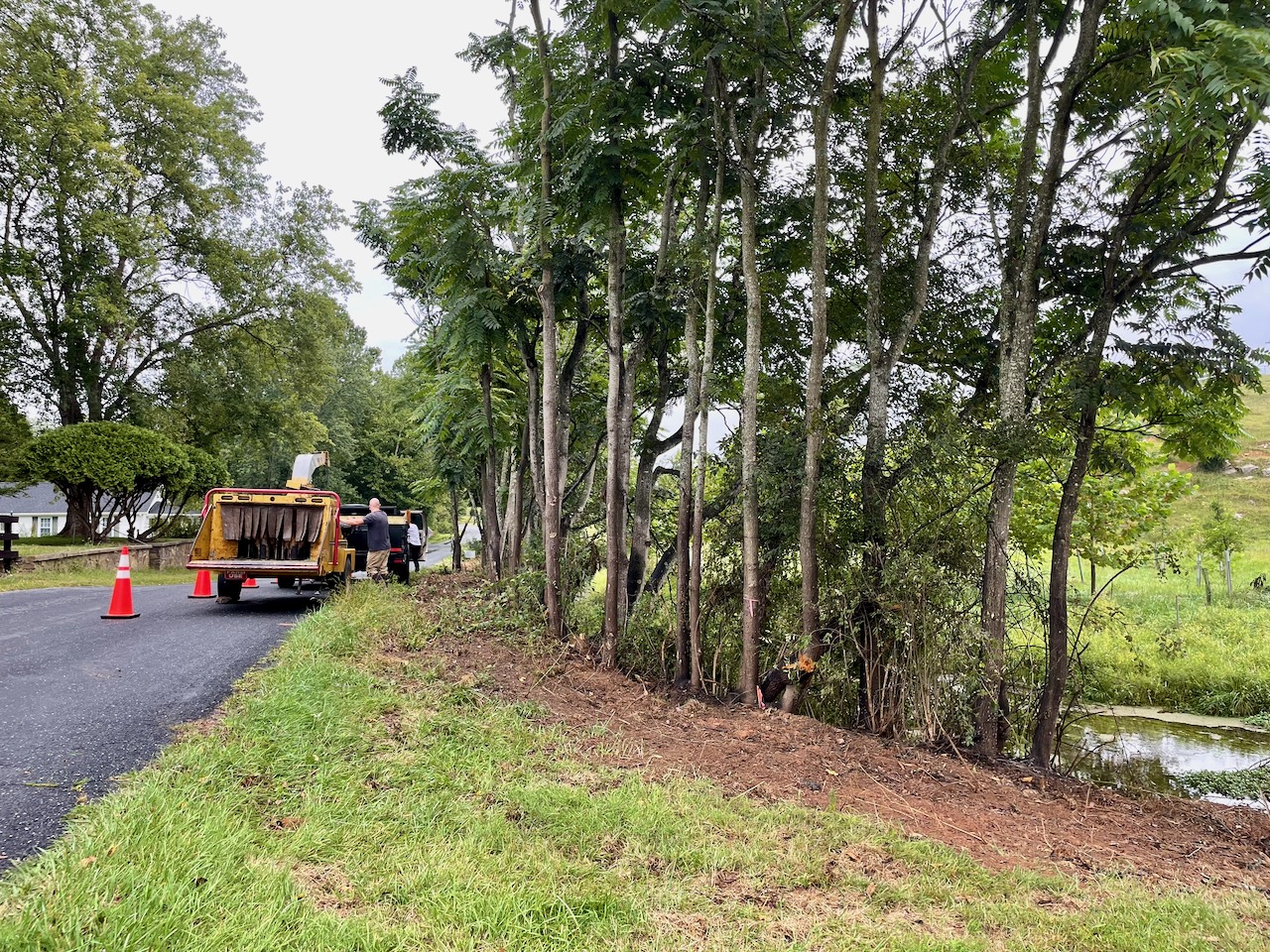
Tree-of-Heaven grove on the north bank of Whiskey Creek.
One prescription to reduce populations of the Spotted Lanternfly is to destroy its preferred host. We had a grove of at least 60 Tree-of-Heaven trees, some as tall as 50 feet, along the north bank of Whiskey Creek. Every single one had Spotted Lanternflies covering the lower trunks. They were laying their eggs on the bark and feeding on the tree’s sap.
Background on Tree-of-Heaven
The Tree-of-Heaven was first brought to the United States in 1784 by a gardener in Philadelphia to serve as an ornamental shade tree. It grows fast; eight feet in its first year and later up to four feet per year. One reason the tree is so invasive is because it reproduces both sexually, by wind-blown seeds, and asexually by sending up shoots from its roots. If a tree is cut down, up to fifty shoots will emerge from its roots.
The internationally listed invasive tree also exudes a chemical into the soil that inhibits the growth of other plants.
Background on Spotted Lanternfly
The Spotted Lanternfly was first detected in Berks County, Pennsylvannia in 2014. Egg masses were accidentally transported on a shipment of stone from Asia. The invasive insect is not a fly at all. It is an insect in the order hemiptera or true bugs. It has a piercing sucking mouthpart that penetrates the bark of grapevines, trees, and shrubs to feed on the plant’s sap.
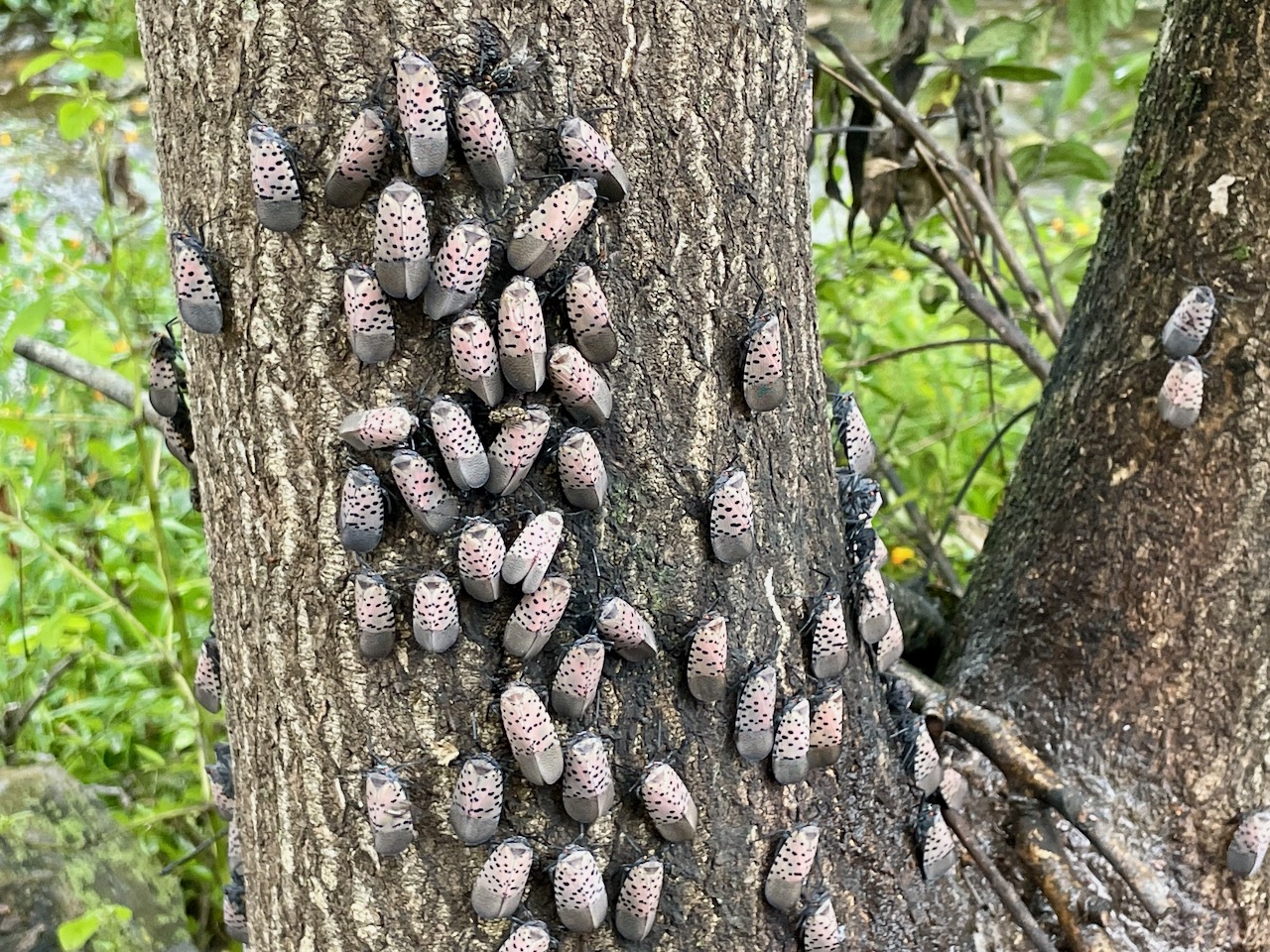
Spotted Lanternflies on Tree-of-Heaven at Whiskey Creek.
Cut the Trees Down
We hired Shane Murrow of Meadow Wood (405-549-5256) and Matt Grundish to cut all of the Tree-of-Heaven trees down and grind them into wood chips. The stumps were treated with glyphosate to prevent the roots from re-sprouting. We are hoping for 90% reduction in root sprouts and anticipate more herbicide treatment in the spring.
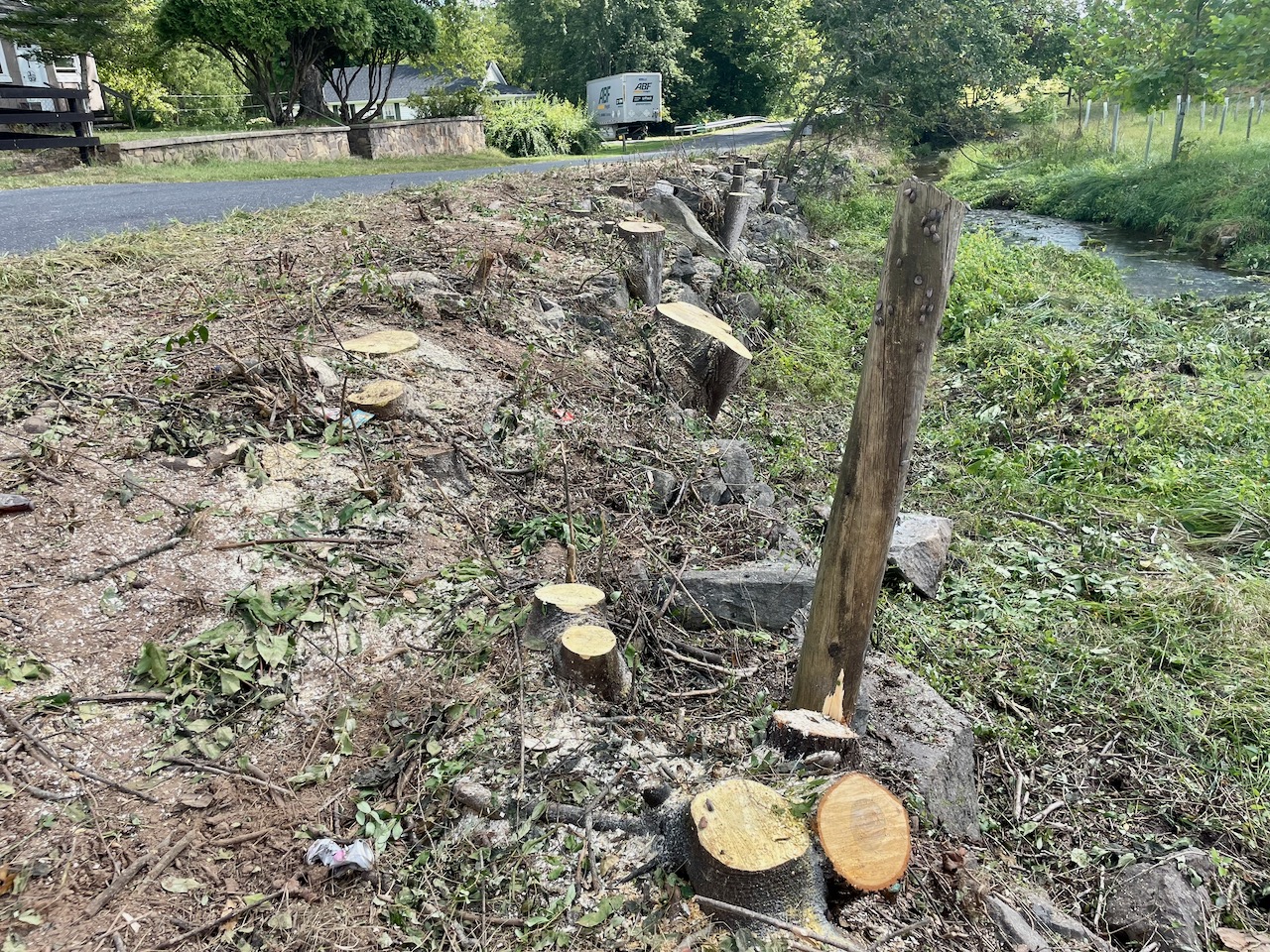
Tree-of-Heaven stumps.
The Harm of Invasive Species
Invasive species, by definition are not native to the community in question and can do one or all of three things: cause harm to the environment, cause harm to human health, or cause economic damage. Tree-of-Heaven causes harm to the environment by taking over the spaces where native species could have been and causes economic harm because it takes time and money to control. The Spotted Lanternfly causes economic damage especially to the wine industry by sucking the sap from grapevines that causes reduced yields and lower sugar content in grapes.
Watch this video to see an 18 inch chipper grind up Tree-of-Heaven limbs.


8 Comments
Leave your reply.