
I’m drawn to the strength and endurance of the Black Locust trees on our farm. Some in the pastures look like heavyweight boxers in their final round, beaten and exhausted. They withstand so much adversity. Black Locust borers eat their heartwood. Locust leafminers consume their foliage. A perennial fungus attacks them. And even though windstorms have torn off most of the branches of some of our trees, they remain standing, willing to fight on. I’ve named several trees after famous boxers.
A Black Locust tree in full bloom is a spectacular show of fragrant white flowers that draws pollinators in such numbers that it’s like a busy superhighway. This pioneer native species is one of the most important and versatile trees on our farm.

Black Locust trees are native to the Appalachian Mountain region and provide important pollinator habitat.
Hard Wood
The Black Locust (Robinia pseudoacacia) is a deciduous, fast-growing tree. It can grow seventy feet tall and live for a hundred years. Its wood is very hard, with a Janka hardness score of 1,700 lbf (pounds of force). That is the amount of force required to embed a .444-inch steel ball halfway through a one-to-two-inch board. The hardness of Black Locust wood surpasses that of Red Oak, making it excellent for firewood. Because of its strength and resistance to rot, many farmers use it for making fence posts. The only trees on our farm that have harder wood are Osage Orange and Hickory.
Here at Whiskey Creek, the Black Locust trees are most predominant in the pastures and we have several groves of them with at least 50 trees providing much needed shade for our cattle. There are many singles scattered throughout the farm.
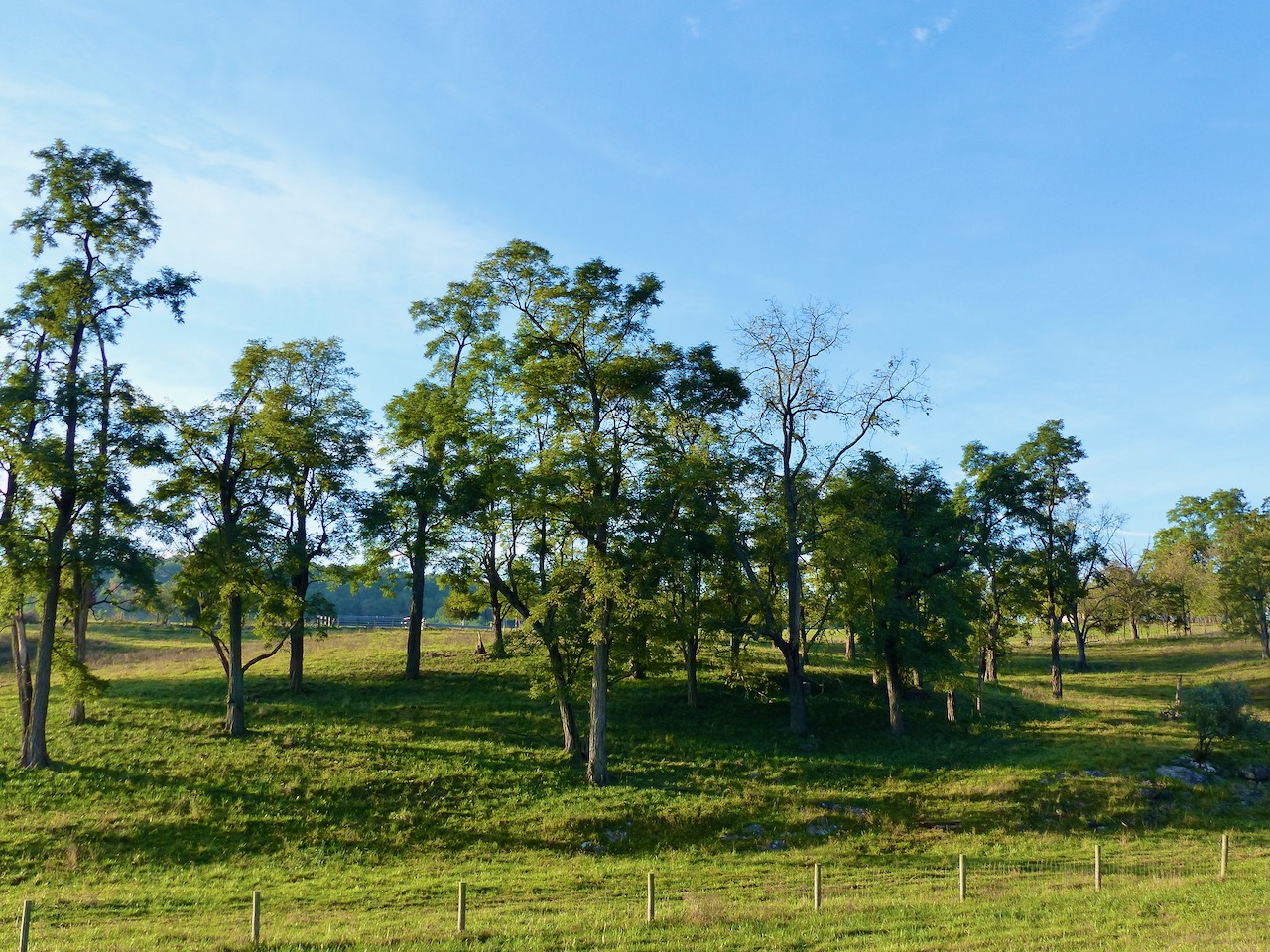
One of the Black Locust groves on our farm.
Severe Windstorms
On July 4 and 5, severe windstorms blew down many of our trees and tore off branches. We are still cleaning up the debris. Those were the same storms, fueled by climate change record heat that canceled President Trump’s parade on the Washington Mall and delayed his speech for the 250th anniversary of our former democracy.
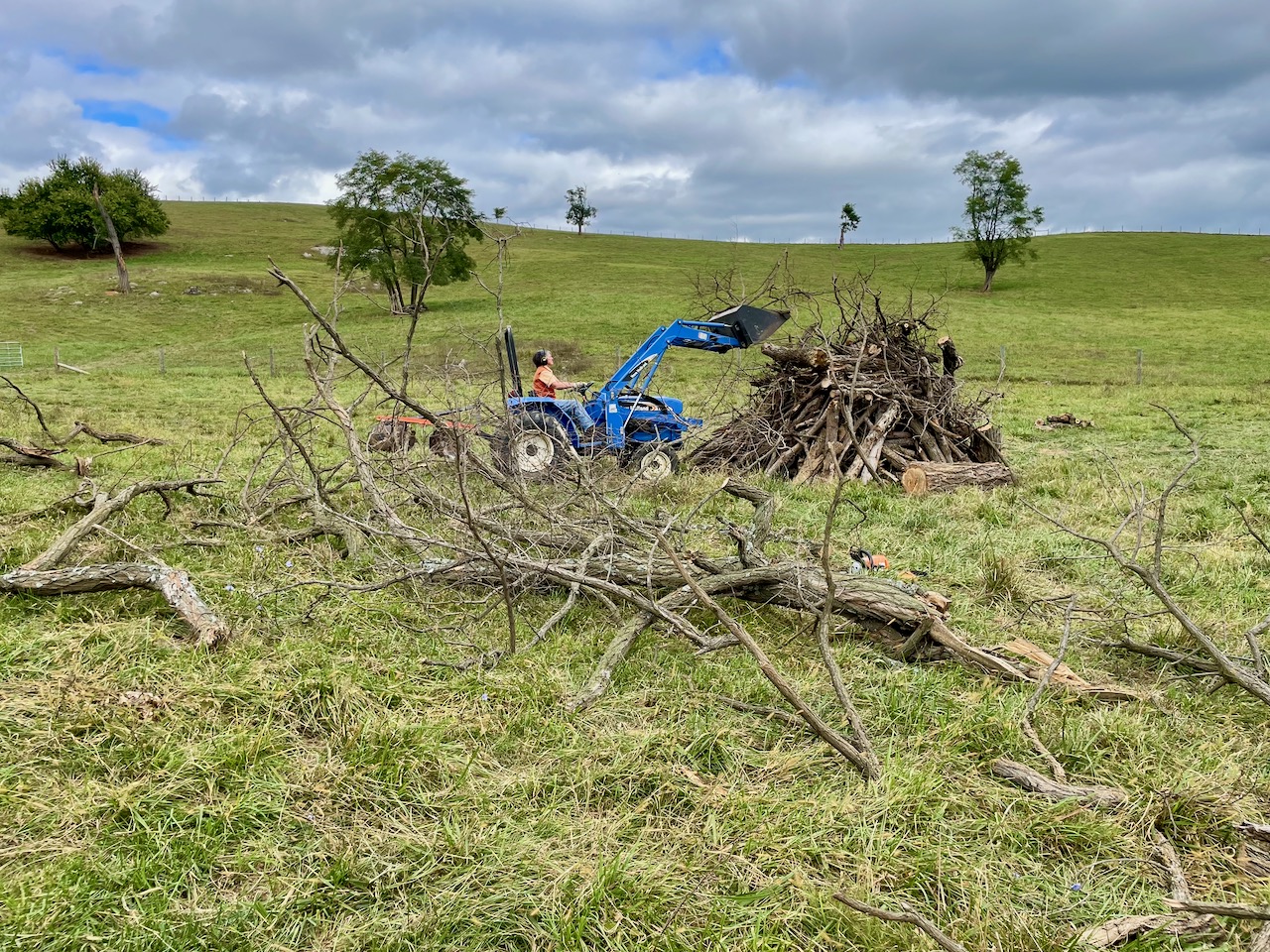
Jeanne loading storm-damaged tree branches onto a burn pile.
The storms blew down the largest Black Oak on the farm. We had to hire a tree chipping company to remove the damage. All the other damage was to Sycamores and Black Locust which made six huge piles that we will burn when we have wetter conditions.
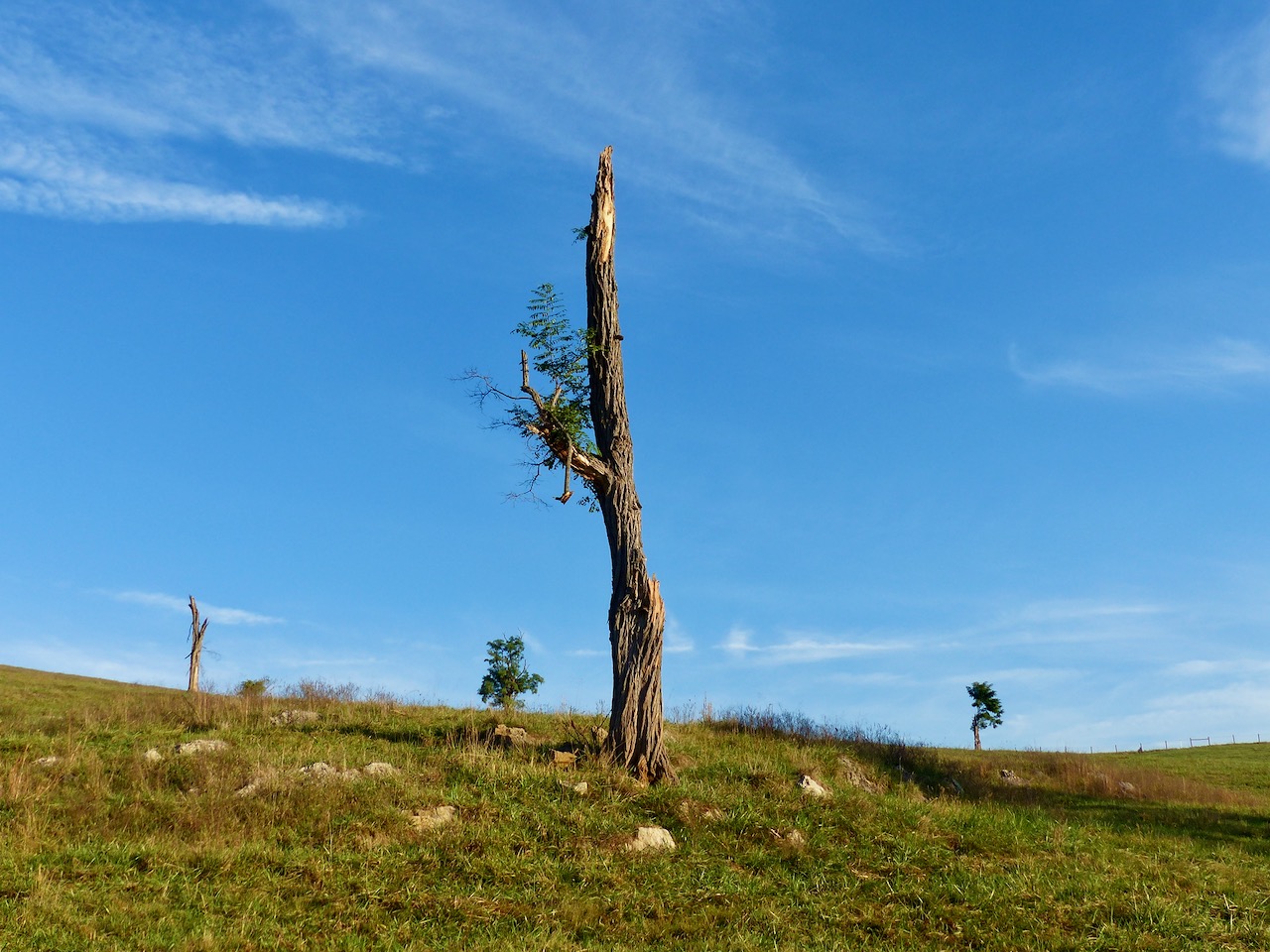
We named these Black Locust trees after heavy weight boxing champions. Joe Frasier on the left, Muhammed Ali in the center, and George Forman on the right.
Perennial Fungus
One of those storms blew down the trunk of a large Black Locust that had a big mushroom on it. I removed the mushroom with a chainsaw and took it to my mycologist friend Chris Vacher. He identified it as a cracked cap polypore and said it was the largest one he had ever seen. He thought it was at least 40 years old. It was on display at the recent Enchanted Mushroom Festival in Churchville, Virginia. Like the Black Locust, these mushrooms are tough. Because the polypore is soft and moist on the inside and has a hard outer shell, indigenous people used it to hold embers for transport.
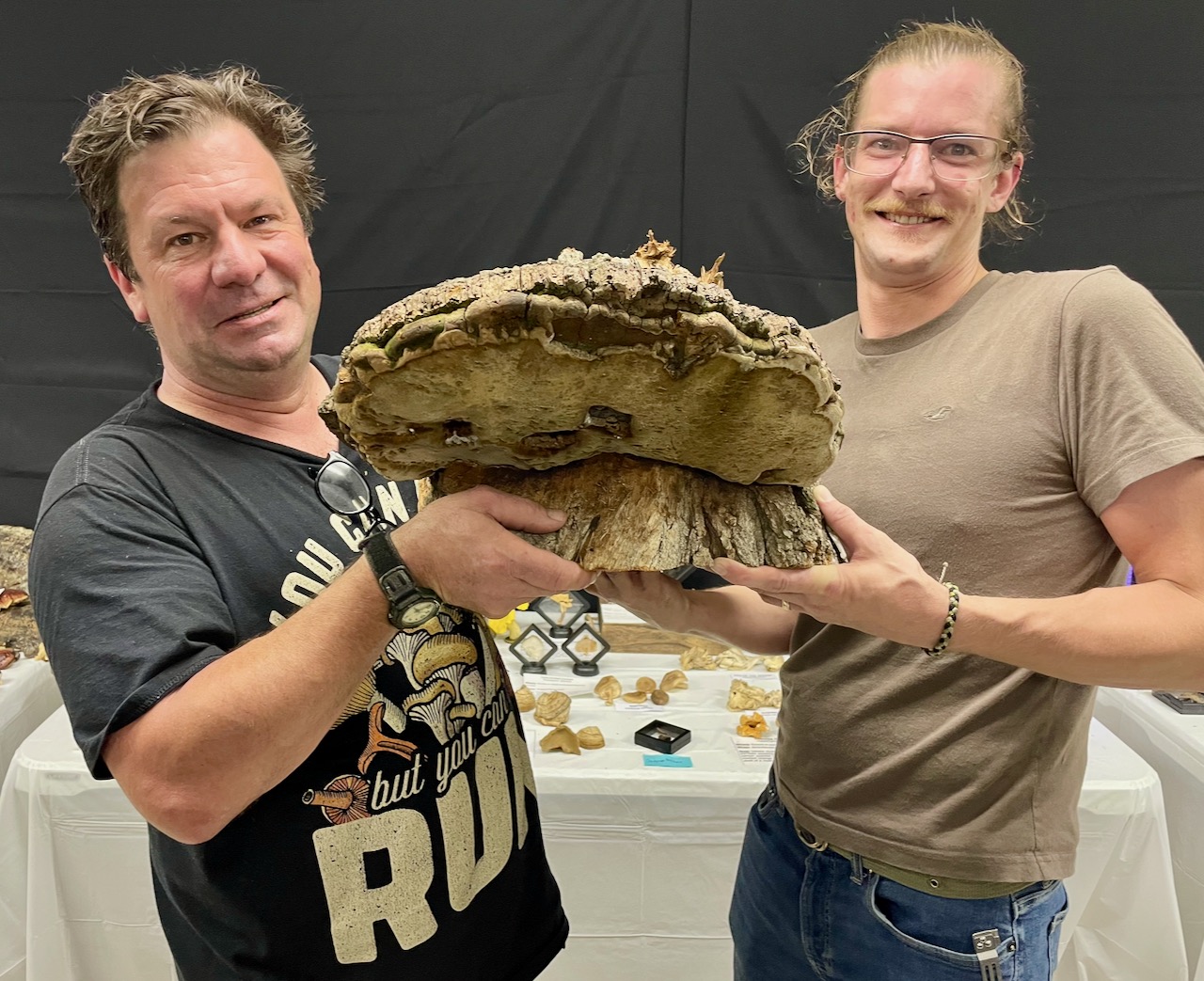
Chris Vacher and Cory Egger, both certified mycologists, hold up the cracked cap polypore mushroom we found on a downed Black Locust tree trunk.
Cracked cap polypores almost exclusively parasitize Black Locust. Windblown spores from the fungi enter the tree through wounds often caused by the Black Locust borer. The fungal mycelium penetrates and consumes the heartwood of the tree with powerful enzymes.
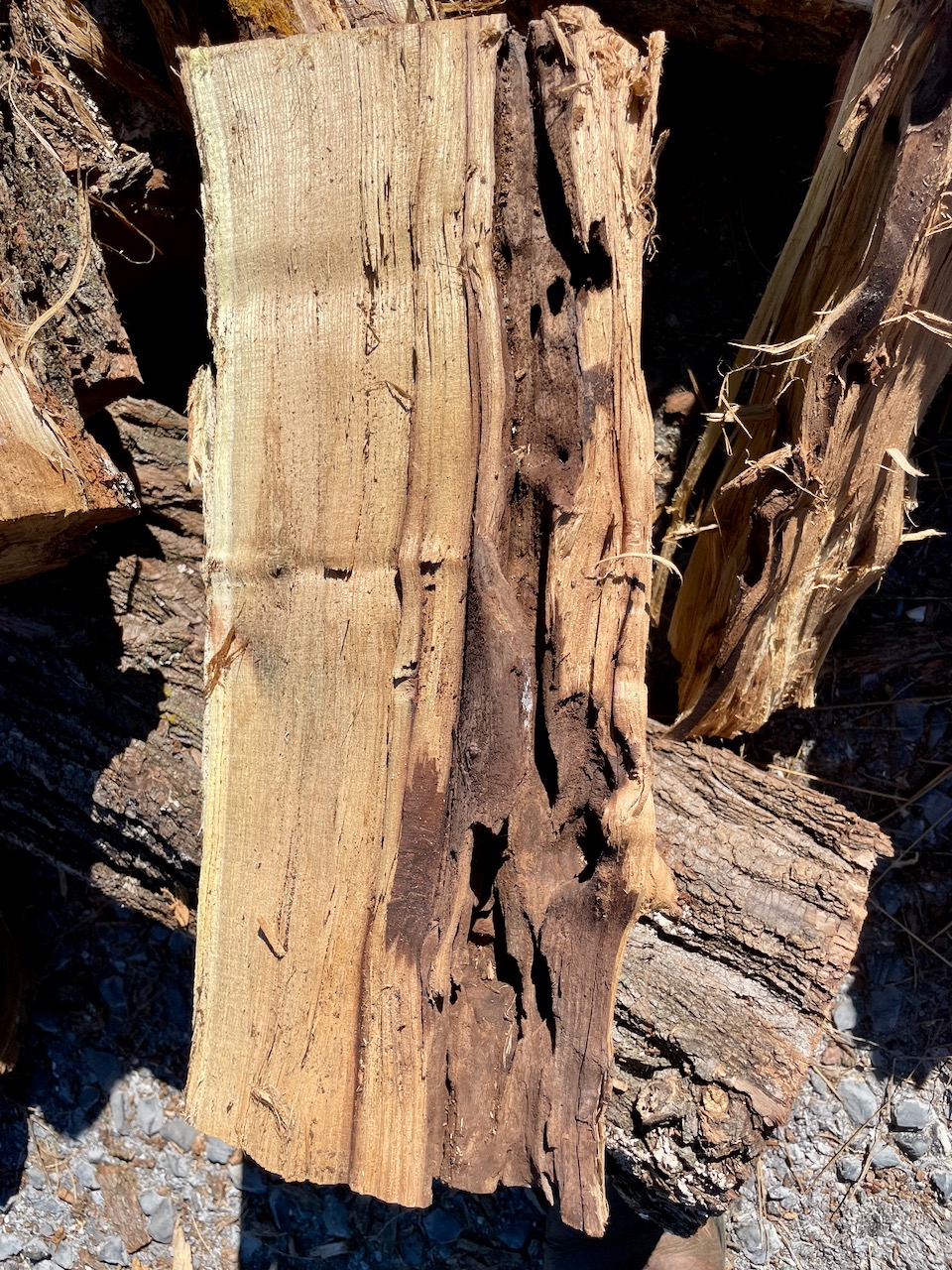
Black Locust borer damage.
Locust Leafminer
Another challenge to the health of the Black Locust is the Locust leafminer, a small beetle that in its larval stage consumes the inner parts of the tree’s leaves in early summer. By midsummer, an infested tree looks as if it’s dying because all its leaves are brown. But usually the trees will re-leaf, and they can often survive repeated complete defoliation.
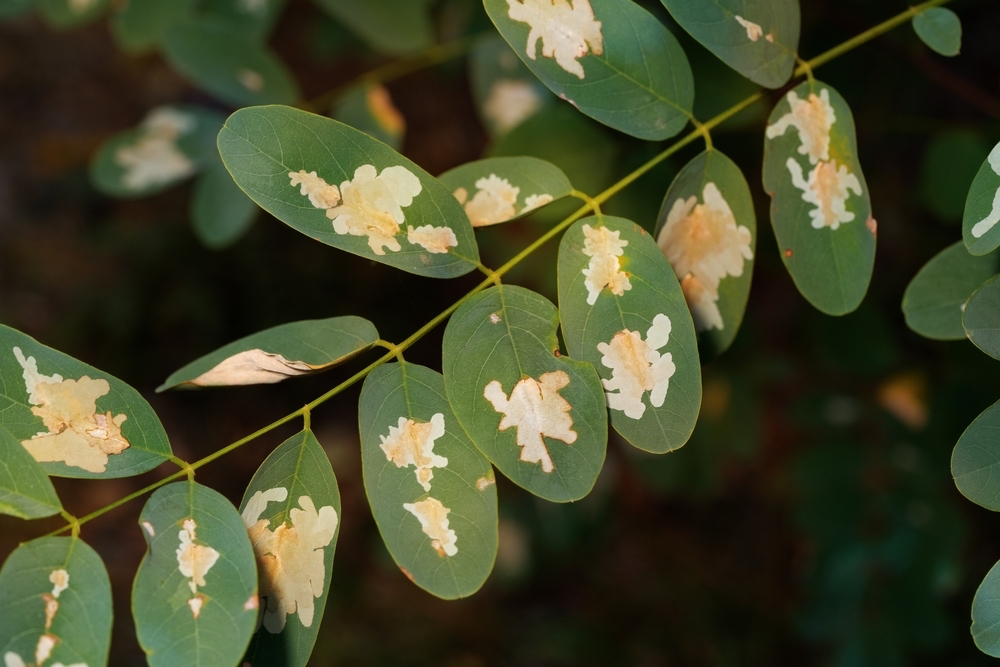
Locust leafminer damage. Photo credit Shutterstock Ksenia Lada
A Feast For Many
I love to stand quietly near a Black Locust tree in full bloom. Its fragrance is sweet and the sound of the pollinators is a constant buzzing. The flowers hang in clusters like white grapes. A tree in full bloom is a sight to behold. The nectar is preferred by bumblebees, honeybees, other native bees, hummingbirds, butterflies, and moths.
The flowers can be eaten raw or cooked and have been used for medicinal purposes, especially as an antispasmodic and anti-inflammatory treatment.
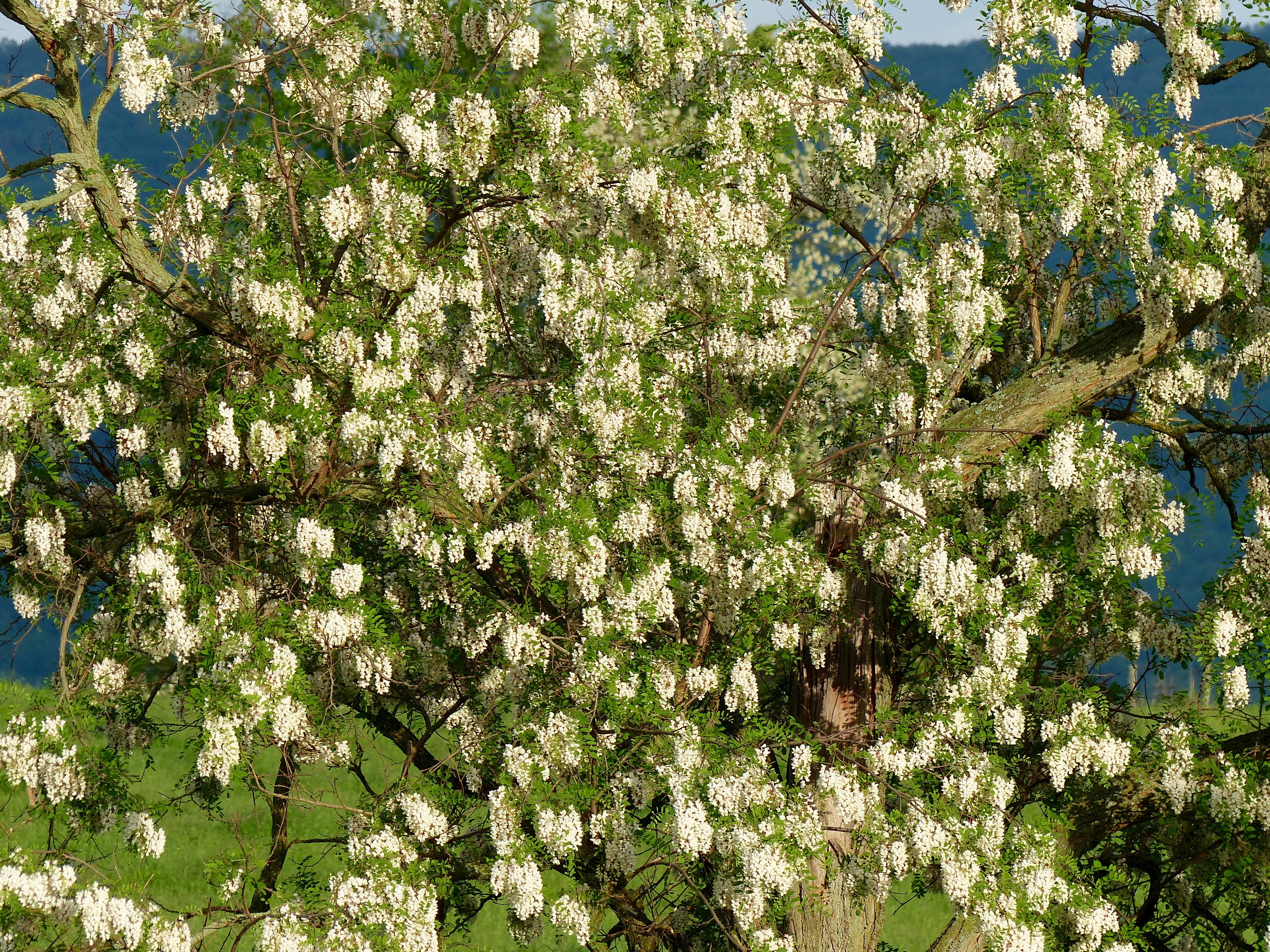
Black Locust in full bloom. Its fragrance and blooms create a superhighway for pollinators.
You might be surprised to learn that Black Locust is a member of the legume family adding nitrogen to the soil. Its beans are consumed by squirrels and birds that can distribute the digested seeds throughout the farm. This is one reason the tree is considered a pioneer species. The beans are considered toxic to horses and children. This tree is also important for wildlife creating nesting sites for many creatures.
The Black Locust’s ability to withstand so much adversity—borers, leafminers, storms, and perennial fungi—is a tribute to the tree’s enduring strength. It will always be one of my favorite trees.
Note: This post was written by a real person: me. All photos by me unless otherwise noted. There are no paywalls, ads, surveys, AI, or popups.


6 Comments
Leave your reply.